
Industry · Field experience
LOTOTO in cement plants
In a cement plant, a production line is a chain of interconnected equipment. During a shutdown, many people from several trades and companies work on it at the same time. The LOTOTO process has to handle a large number of parallel lockouts and give a clear picture of who is still working.
A shutdown means many jobs at once. The process must show who is still working.
What makes LOTOTO in a cement plant specific?
Short answerLarge interconnected equipment with several energy types, a dusty and hot environment, and planned kiln shutdowns with many jobs running in parallel.
A cement plant is a sequence of linked equipment: from crushing and raw grinding through the preheater, rotary kiln and clinker cooler to cement mills, silos and dispatch. A single machine often has several energy sources, and different trades carry out their isolation.
Besides electrical energy, there is energy that is not obvious at first sight. This includes material accumulated in bins and cyclones, the inertia of large rotating parts, compressed air in auxiliary systems, and hot material and surfaces.
Which equipment and energy sources are typically isolated in a cement plant?
Short answerMainly the drives of the kiln, mills, crushers, conveyors and fans. Besides electrical energy, mechanical, gravitational, pneumatic, hydraulic and thermal energy must be considered.
| Equipment / area | Examples of energy sources |
|---|---|
| Rotary kiln and its drives | electrical, mechanical, thermal |
| Cyclone preheater | thermal, gravitational, pneumatic |
| Clinker cooler | electrical, hydraulic, mechanical, thermal |
| Raw and cement mills | electrical, mechanical, hydraulic |
| Crushers | electrical, mechanical, hydraulic |
| Belt conveyors, bucket elevators | electrical, mechanical, gravitational |
| Process fans | electrical, mechanical |
| Silos and bins | gravitational, pneumatic |
| Filters | electrical, pneumatic |
This overview is illustrative only. The actual energy sources and isolation points come from your equipment register and your plant’s approved procedures.
In the digital process, each type of energy is recorded separately. An electrician can confirm the electrical isolation, a fitter the mechanical one, each stating their own lock. The system shows the equipment as locked only once all required energy sources have been confirmed. This is explained in more detail on the Energy isolation page.
Cement plants are large technical installations with many conveyors, mills and crushers that usually have long-established identifiers – in the maintenance system or according to a group standard. The digital equipment register works with these identifiers, so equipment keeps the codes that operators and maintenance already know.
What do maintenance and shutdowns look like in a cement plant?
Short answerMaintenance runs continuously on sections of the line that can be taken out of service, and on a large scale during planned kiln shutdowns.
In normal operation, jobs concern individual machines while the rest of the line keeps running. Identifying the right equipment precisely is essential then. QR labels and a register using the plant’s established equipment codes help with this.
During a shutdown, many lockouts are prepared and approved in a short time, often on groups of equipment that belong together. The digital process allows such groups to be prepared in advance and a lockout to be created for the whole group at once.
ReadLockout trackingHow do you coordinate work groups and contractors?
Short answerEach group working on the equipment joins the lockout. The equipment can be unlocked only when none of them is still active.
Fitters, electricians, instrumentation technicians and contractors may work on one machine at the same time or one after another. When each group joins the lockout, the overview shows who is currently working on the equipment and who is responsible for each group. Unlocking stays blocked until every group has closed its work.
At shift change, an authorised substitute can take over a task. The record keeps who actually performed it. How contractors take part in the process is something we design according to your rules. More on the Group lockout page.
How are approval and documentation handled?
Short answerApproval can follow responsibility for equipment and areas. Forms for high-risk work are attached directly to the lockout record.
An operator approves lockouts only for the equipment they are responsible for. If equipment is flagged for high-risk work, such as confined space entry, work at height or hot work, the relevant form template is linked to the record. The completed document is then attached to the lockout and stays with it in the archive.
Who may request, approve and perform each step is configured according to your internal rules. More on Roles and authorisations and Digital permit to work.
What can a digital LOTOTO process bring to a cement plant?
No promises in percentages. These are concrete things a digital process changes in day-to-day work:
Experience from the Danucem cement plant

LOTOTO reference
LOTOTO in industrial practice
We digitalised the LOTOTO process at the Danucem cement plant. We now bring that experience from a real operation, especially in coordinating work groups, isolating each energy separately and handling substitutions, to other sites.
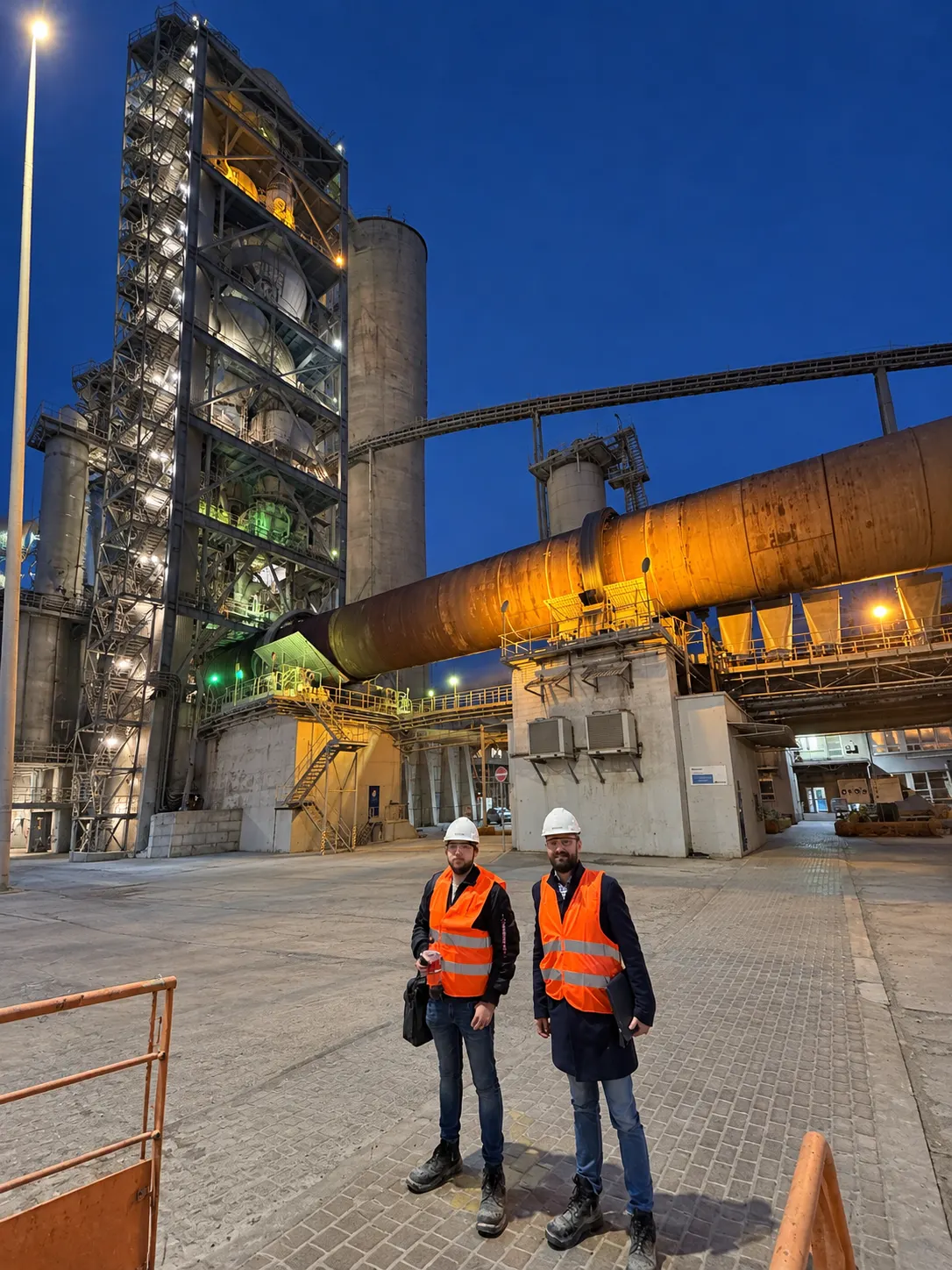
The photo of our team in front of the rotary kiln is from our visit to the Danucem cement plant. The header photo and the other illustrations on this page do not come from the Danucem operation.
What does digital LOTOTO not replace?
Frequently asked questions
Can we use our existing equipment codes?
Yes. The equipment register works with the equipment codes you already use. Equipment can also have a description, assigned energy types, photos and a QR label.
Can a lockout be prepared for several machines at once?
Yes. Equipment that is locked out together can be grouped in advance, and the lockout created for the whole group.
How do contractors take part in the process?
That depends on your rules: whether contractor staff have their own access or are represented by a responsible person from your plant. We design the approach together with you.
Where is Tryout recorded?
How Tryout is recorded and built into the digital workflow is designed according to your plant’s rules.
Can we start with a single area?
Yes. We recommend starting with a selected area or line, validating the setup in practice and then expanding.
Next step
Show us how you lock out.
We go through your LOTOTO procedure, permits to work and shutdown process with you. Then we work out together which parts are worth digitalising first.